Ecuador

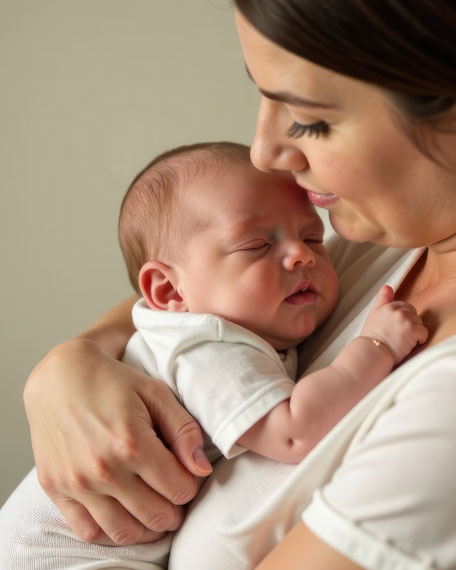


“Between 40% and 80% of mothers will experience low mood postnatally, of which 15% will even suffer from postnatal depression,” says Dr. Amira Maamri, Psychiatrist at Razi Hospital. It is crucial for mothers with postnatal depression to get support from appropriate health care professionals. However, all women need someone to turn to and rely on after giving birth. “Unfortunately, most women suffer in silence,” says the expert. “They feel ashamed about their feelings and often think they have failed as a mother from day one. What often contributes to these feelings is the great love they have for their baby and their worries over them. Sometimes, if breastfeeding isn’t working or if the child cries a lot, mothers feel like they can’t do anything right.”
“Sadness, crying, loss of concentration, poor sleep, poor appetite and even irritability, aggression and confusion can be signs that a mother is not well,” says Dr. Maamri. “In most cases where these symptoms do not improve - or even intensify or last longer than two or three weeks - is a sign that the ‘baby blues’ have probably progressed to depression.” Oftentimes, the mother may be tired but will keep the façade of a happy mum despite her fatigue. However, on the inside, she may feel burnt out, hopeless or deeply sad.
“Mothers can be pillars of strength, but they can also be very vulnerable and easily hurt,” says Dr. Maamri. “But they don’t let anyone see that. That makes it all the more important for those close to them to treat them sensitively. Don’t put pressure on them or pester them.” It is better to support them by taking over simple tasks such as going out with the baby for a walk so that the mother can take a shower or eat and rest for a while. While friends, family and partners are no substitute for a therapist, they can help reassure the mother that she is not alone and that she has someone to talk to if she wants to.”
“The first child causes particular upheaval in a woman’s life, even if she has a wonderful, supportive partner who is a great parent,” says Dr. Maamri. “The first and most important step for mothers is to be honest with themselves and acknowledge when things aren’t going well. The second step is to seek support and talk about their emotions.” In our expert’s experience, the first step is the hardest. “Once a woman opens up about her feelings, she often experiences relief. All the more so because she realizes that she is not alone in feeling this way.”
Many mothers around the world are going through the same situation, and even though it might be hard to realize sometimes, there are people around willing to listen and offer support, including professionals. “Often, but not always, one’s own mother is a good person to talk to,” says Dr. Maamri. “They are often the right person to put their arms around you and comfort you.” The dad or partner may also be overwhelmed by the new situation. Dealing with their own struggles as a new parent, some dads might even overlook their partner who is in need of help. “Men often like to distract themselves with work or hobbies or just deal with things on their own. Therefore, it’s important for men and partners to also seek help if they feel overwhelmed.”
“It’s amazing how such a small person can have such a huge impact on even the most stable personalities,” says the psychiatrist. “But it’s precisely these sorts of personalities that often have difficulty admitting there is a problem.” Trying to deal with things on your own can seem to work in the short and medium term, but in the long term, a distressed mind will always make itself known eventually. “Around 89% of mothers who suffer from postnatal depression and do not seek help develop suicidal thoughts,” says Dr. Maamri. “That’s why it’s so important to seek help quickly.”
Please note: Pharmalys Laboratories are experts in the field of infant nutrition. We work closely with psychologists, psychiatrists, specialist health care professionals and scientific experts. However, we are no substitute for these experts. If you think you may be suffering from depression or if you are not feeling like yourself, seek advice from a health care professional right away.
Try taking the test. Link to the Edinburgh Postnatal Depression Scale (EPDS):
(www.fresno.ucsf.edu/pediatrics/downloads/edinburghscale.pdf)

 Back
Back